Care You Can Rely On.
Azithromycin 500 mg—trusted antibiotic therapy to fight infection effectively and gently. Easy to take. Well tolerated. Reliable results. Helps you feel better sooner and return to your normal routine.

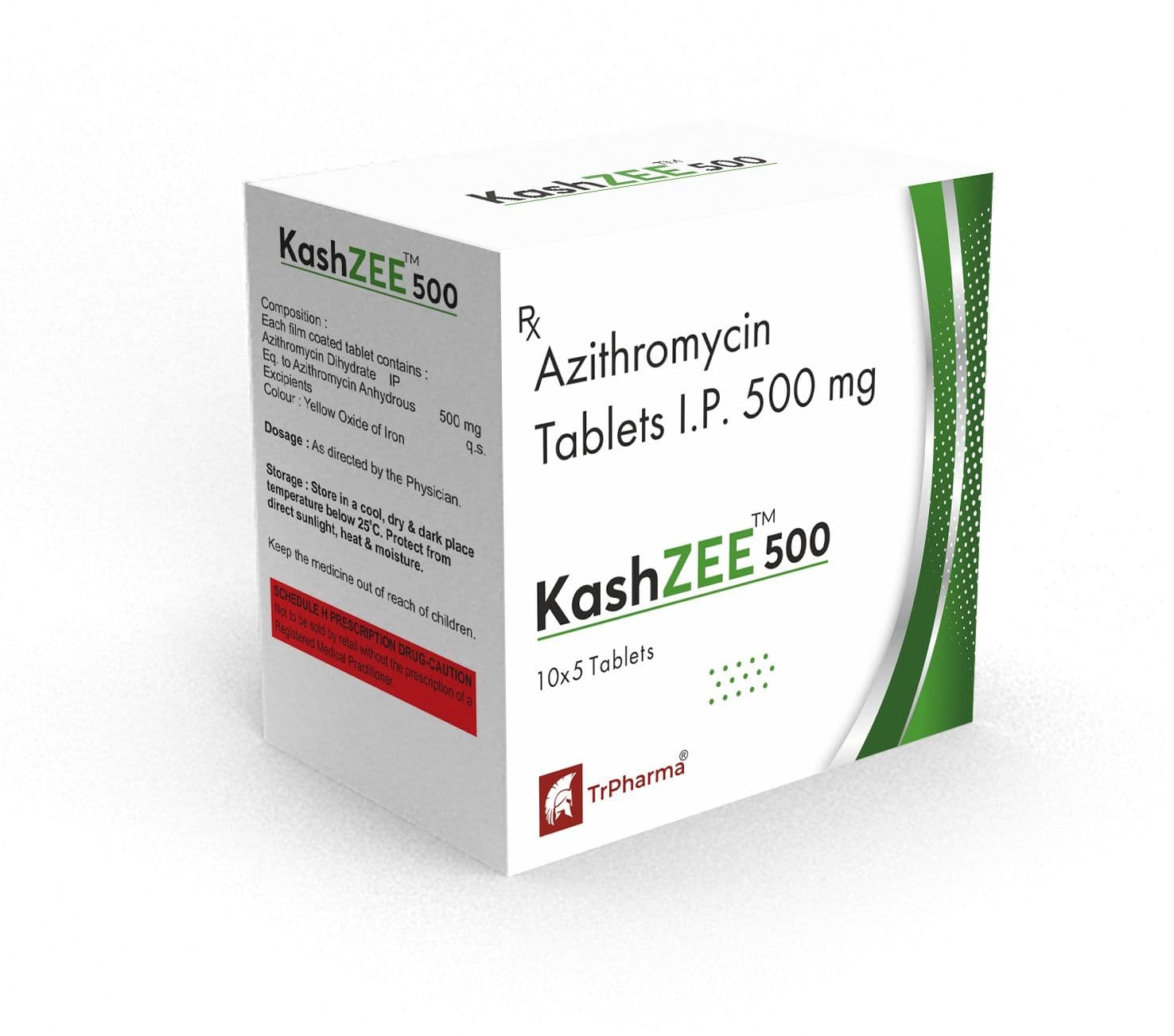
KashZEE 500 · Tablet, Alu-Alu packaging (10×5 tablets)
Used for treating a variety of bacterial infections, including those of the respiratory tract, ear, sinus, skin, soft tissues, and certain sexually transmitted infections.
Effective against Gram-positive, Gram-negative, and atypical organisms, including intracellular pathogens.
Azithromycin is a macrolide antibiotic that works by inhibiting bacterial protein synthesis through binding to the 50S ribosomal subunit. This prevents bacterial growth and replication, leading to resolution of infection. It achieves high tissue and intracellular concentrations, allowing once-daily dosing and shorter treatment duration.
Bronchitis, community-acquired pneumonia, pharyngitis, tonsillitis
Sinusitis, otitis media
Skin and soft tissue infections
Uncomplicated Chlamydia trachomatis
Mycoplasma, Chlamydia, Legionella species
| Adults | One tablet (500 mg) once daily for 3–5 days, or as directed by a healthcare professional |
|---|---|
| Adjustments | Use with caution in hepatic impairment. Dose adjustment generally not required in renal impairment. |
| Pediatric use | Dosage adjusted by body weight and severity of infection; pediatric formulations may be used where indicated |
| Missed dose | Take as soon as remembered, unless close to the next scheduled dose — do not double the dose |
| Storage | Store in a cool, dry place, away from direct sunlight and moisture. Keep out of reach of children. |
Complete the full course of treatment, even if symptoms resolve early. May be taken with or without food; taking with food can reduce stomach discomfort. Avoid unnecessary antibiotic use to reduce the risk of resistance.
Known hypersensitivity to azithromycin, erythromycin, or other macrolide antibiotics. History of cholestatic jaundice or hepatic dysfunction associated with azithromycin use.
Common: Diarrhea, nausea, abdominal pain, vomiting, headache.
Serious (rare): Severe allergic reactions including anaphylaxis, QT prolongation and cardiac arrhythmias, liver dysfunction, C. difficile-associated diarrhea.
Generally considered safe when prescribed by a healthcare professional.
Excreted in small amounts in breast milk; usually safe, though mild GI disturbances in the infant may occur.
Dosage adjustments required based on body weight and severity of infection. Pediatric formulations may be used where indicated.
Discontinue use and consult a healthcare provider immediately if severe side effects such as rash, palpitations, or persistent diarrhea occur.
Yes, but taking it with food may help reduce gastrointestinal discomfort.
Avoid alcohol, as it may worsen side effects and delay recovery.